Helping students focus on education without financial worries.
Specially Designed for Youth
Providing opportunities and financial support to help young students
Building a Brighter Future
Supporting students from Class 1 to 12 across India.
Scholarships for Deserving Students
About MPOWER Scholarship Program
Launched in 2024, MPOWER is a flagship Corporate Social Responsibility (CSR) initiative of the TMG Sunidhi Foundation, managed by Ananta Seva Foundation (a registered Section 8 Not-for-Profit organization).
Financial hardship is a primary contributor to high school dropout rates in India—particularly among girl students. MPOWER has successfully supported over 500 children through scholarships, ensuring uninterrupted schooling and equal opportunities.
The rising cost of school education in India forces many meritorious students to discontinue their studies. The MPOWER Scholarship provides a ₹10,000 annual grant directly via Direct Benefit Transfer (DBT) to selected students.
100% Free Application Process: Neither MPOWER nor Ananta Seva Foundation charges any application or processing fees at any stage.
Eligibility Criteria
To apply for the MPOWER Scholarship, applicants must meet the following criteria:
Academic Enrollment
Currently studying in Class 1 to Class 12 in any government-recognized school in India.
Academic Performance
Minimum 60% marks scored in the previous qualifying examination.
Family Income
Belonging to a lower-middle-class family with an annual household income of up to ₹3.5 Lakhs.
Preference
Preference is given to children of self-employed parents or daily wage earners.
The process is completely free
Who Can Apply
The rising cost of school education in India forces many meritorious students to discontinue their studies. The MPOWER Scholarship provides a ₹10,000 annual grant directly via Direct Benefit Transfer (DBT) to selected students.
100% Free Application Process: Neither MPOWER nor Ananta Seva Foundation charges any application or processing fees at any stage.
Eligibility
Studying in Classes 1 to 12 in a government-recognized school across India.
Indian students from lower middle-class families (preferably self-employed parents).
Only a few documents are required for verification and approval. Once selected, the scholarship amount is directly transferred to the student’s bank account.
Completely Free
0%
Scholarship gived
0 +
Years Experience
0 +
Happy Familes
0+
Your Trusted Partner in Automation
Why Choose Us
Why Self-employed Families?
Various estimates suggest that India is the fastest-growing major economy in the world. The National Sample Survey Office released the Periodic Labour Force Survey (PLFS) indicates a rapid change in the employment data. According to the survey, unemployment has decreased over the past five years. A major contributor to this achievement is a rapidly expanding self-employed sector.
While it is contributing to the economy handsomely and poised to grow in days to come, people working in the segment are exposed to their fair share of challenges and risks. MPOWER acknowledges their challenges and offers a helping hand by providing their kids financial assistance for their studies for a brighter tomorrow.
The process is completely free
Challenges faced by Self Employed Families
Irregular Income
Self-employed face unpredictable cash flow. Clients may pay late, projects can be delayed, or business may fluctuate seasonally.
Isolation and Lack of Collaboration
Self-employed typically work alone, which leads to feelings of isolation and loneliness.
Lack of Job Security
Unlike traditional employment, self-employment lacks benefits like Job Security, health insurance, retirement plans, or paid time off.
Work-Life Balance
Striking a balance between work and personal life can be challenging when working from home or having flexible schedules.
Why Target Self-Employed Families?
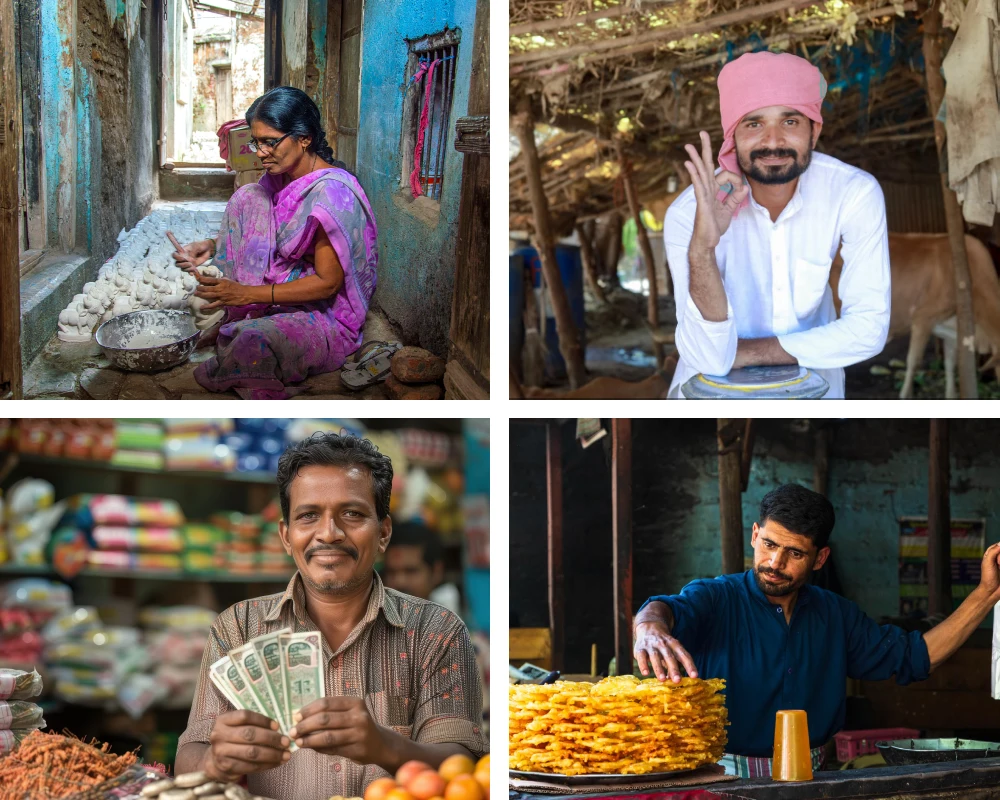
India’s self-employed workforce—including micro-business owners, street vendors, artisans, gig workers, freelancers, and small tradespeople—makes up over 57% of the total workforce (according to the Periodic Labour Force Survey by NSSO). While self-employed individuals drive economic resilience and job creation, they face distinct financial vulnerabilities:
The MPOWER Scholarship acknowledges these risks and steps in to ensure their children’s education remains uninterrupted.
Irregular Income & Unpredictable Cash Flow
Income fluctuates due to delayed payments, seasonal demands, or market shifts.
Absence of Social Security
Unlike corporate or government workers, self-employed workers lack health insurance, paid leave, and retirement benefits.
Work-Life & Financial Stress
Managing operational overheads directly impacts their ability to fund higher school fees.
Apply for the MPOWER Scholarship Today!
You can apply for the scholarship if you are a student of Class 1 to 12 in a Govt recognized school and have scored more than 60% in the last exam.
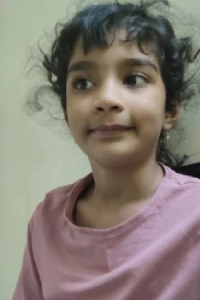
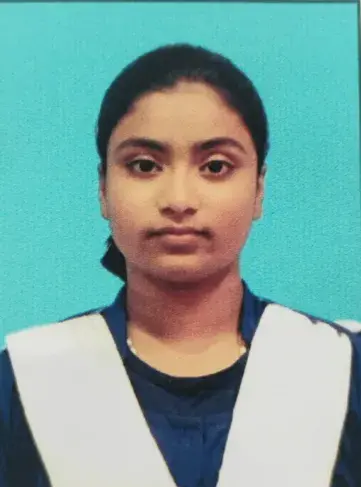
I am Arfiya Sheikh, a student in Karnataka. My father is an Interior Designer. I wish to study Medical and become a doctor. Thank you Mpower scholarship for the financial Assistance.
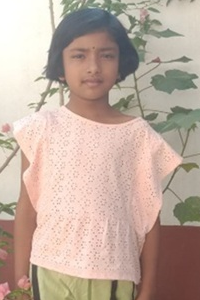
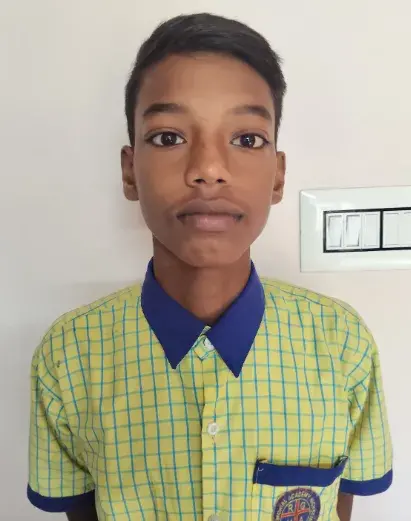
I am a student of Class 4, of Shibda Junior Basic School, West Bengal. I scored 96% marks in the previous examination. My father is a farmer and mother is a homemaker. I wish to become an Advocate and practice at High Court. I am grateful to MPower Scholarship for supporting my dream by selecting me. Thank You.
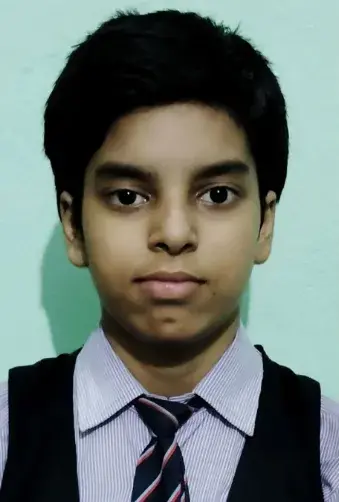
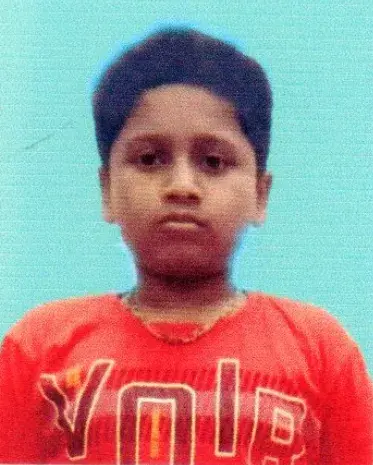
I am Aditya Raj, student of Class 8. I lost my father when I was 10 yrs of age. I dream of becoming an Engineer, but I need resources for higher education, which is expensive. The MPOWER Scholarship will help me continue my studies without financial stress. Engineering requires a strong foundation in math and science, and this scholarship will allow me to access better study materials and coaching classes.
MPOWER scholarship helps me to continue my studies without any obstacles. I will buy books, pay school fees and take tuition. This is a great help. I am confident now that I will achieve my goals. Thank you Mpower team.
My favourite subjects are Maths and Science. I want to become a Scientist. I am quite inspired by the Stories of Albert Einstein and APJ Abdul Kalam. Scholarship will help me dream big and achieve my goals. Thank you MPOWER.
The scholarship will be extremely useful in my studies because it will reduce the financial burden on my education. With the help of a scholarship, I can buy necessary books and access study material that will improve my learning more over receiving a scholarship will motivate me to work even harder to maintain good academic performance and make the best use of the opportunity.
I am grateful to receive scholarship as it will help me tremendously to reach the pinnacle of success. Being a second-generation learner, the scholarship will assist in payment of school fees, purchase books and study materials. As Nelson Mandela said, "'Education is the most powerful weapon which you can use to change the world" so by the virtue of education I want to achieve that powerful weapon.
I come from a poor family. My parent struggle to pay my school fees and other expenses. With the scholarship, I will be able to continue my studies. My family is thankful for your help.
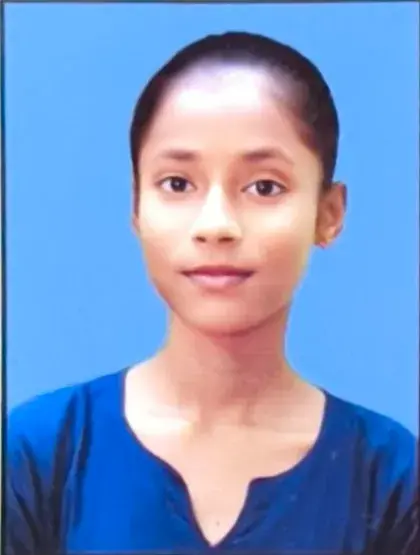
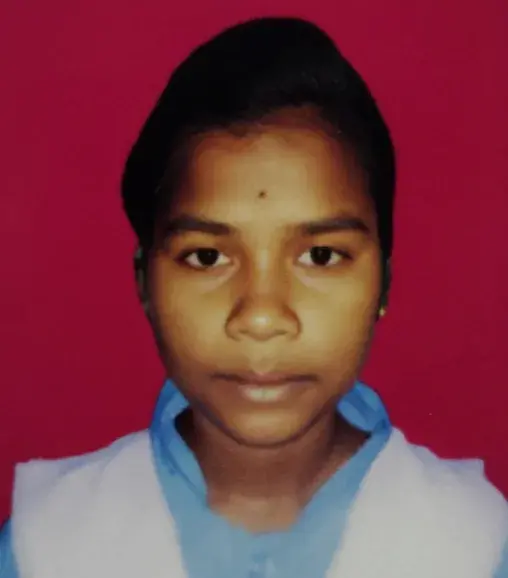
I am Sonali Pradhan. I come from a rural family where affording education is difficult. MPOWER will greatly help me by reducing struggles that affect my studies. I will use the scholarship fund to buy study materials and take extra courses to improve my understanding of the subjects. This scholarship is a big step towards achieving my dreams.
My name is Chitrance Kumar. I come from a poor family as my father has a private job and my mother is housewife. The scholarship will be a big benefit for us as we can pay school fees, buy books and copy. I will study well and try to qualify in future too. Thank you Manipal Group.